
This book from a small publisher has gained considerable popularity and brought the author a prestigious prize from the weekly magazine Polityka.
The plot is fairly insubstantial, because all it contains is the description of a one-day visit to a boarding house in a summer holiday place outside Warsaw by a young man who as a small boy often spent time there with his granny, and now encounters several greatly aged guests who remember him as a child. But it is no ordinary boarding house: the residents are Jews who survived the Holocaust, and so everything that occurs here is like a dream about the past, a summoning-up of ghosts, a resurrection of not just people but also events, debates and ideological arguments from long ago.
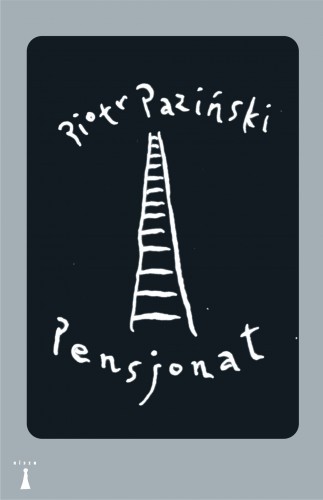 The Boarding House, Piotr Paziński,
Nisza Publishing House, Warsaw 2009Thus the plot only appears to be simple, but in fact it is set on several time scales and is bursting with typically Jewish anecdotes and parables, because its heroes thrive on the past, which meets up with the present in a sort of concurrent time. Exactly how the old people see the past, like something so close as to be within reach, but also distorted by obsessions or gaps in memory; they are the last living witnesses to the pre-war world of the Polish Jews. The author shows in what form Jewish tradition exists in Poland today. The book has an unusual atmosphere full of warmth and gentle irony, draws sensually rich images, and at the same time shows the diversity of the Jewish heritage: we see it on the one hand as a dialogue between different fates, and on the other as an endless dispute about the ultimate questions, about the existence or non-existence of God, and about the tasks facing the Jews. This dispute permeates the everyday world and blends with it in a comical way, but gives it meaning even when it is going through drastic changes, and most of the people taking part in the argument are dying. At that point it is taken up by the survivors, who resurrect the dead as partners in the debate.
translated by Antonia Lloyd-Jones
The above review was originally published on the Book Institute's website.
Piotr Paziński (born 1973) belongs to the “third post-Holocaust generation” and is editor-in-chief of the monthly Midrasz.


