
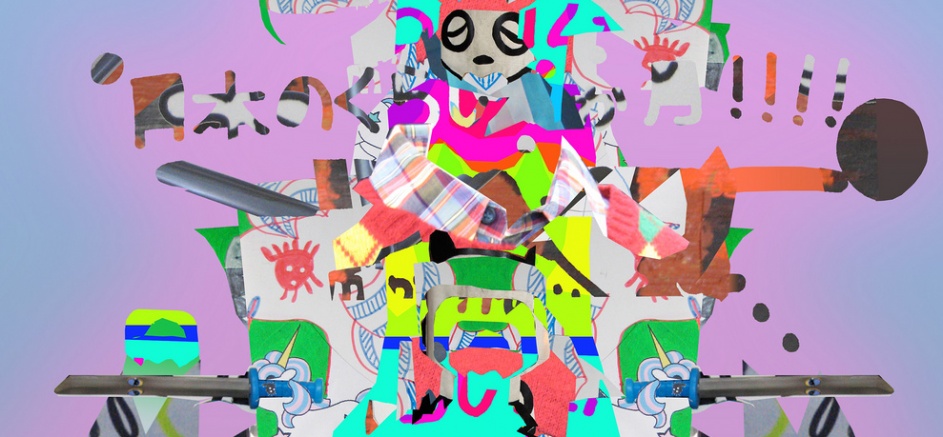
Jurying in a literary contest is a rather frustrating affair. Out of several hundred submission, a judge must select the dozen or so with enough artistic merit to be shortlisted. Next, the panel of judges makes unjust decisions, rewarding some and sending others away empty-handed. It’s impossible to make a fair decision anyway, so no one worries about it too much. Statistically, it all balances out in the end, thanks to the sheer number of contests held every year. And since the very idea of a literary contest is absurd in itself – after all, art isn’t a long jump or 100 meter hurdles – the judges’ decisions are rarely met with objections.
Remikstura was an exceptional contest. Not because the winners were actually more deserving than others. The verdict was, as always, unfair. What made Remikstura an exceptional contest was the exceptional challenged posed by Leszek Onak of the Liternet Foundation: participants were asked to submit pieces that were 100% remixes. Writers were thus asked to do something that, in theory, flew in the face of the very foundations of their vocation. They were to retreat into themselves, suppressing their egos, and either let others speak through them, or speak their mind through the words of others.
We were surprise by the response. Hundreds of pieces were submitted, representing a variety of styles, from poems to plays to prose poetry. There was even one musical score. A lively discussion erupted on liternet.pl, with literary circles paying close attention to the competition; as opposed to other contests, entries to Remikstura were published at the moment of submission, subjecting the entire competition to public scrutiny.
Participants and readers enjoyed an adventure in hunting for meaning, picking out references, and following the changes and transformations of the remixed submissions. Some saw it as an opportunity for polemic, others built their own network of meanings on existing foundations, while others used pieces of text as Lego blocks, reveling in the unbridled pleasure of writing, and still others approached the task as a literary puzzle, carefully selecting and meticulously piecing its elements together. In other words, they did just what they’ve always done, but using a different technique.
This comes as no surprise. There’s no such thing as remix culture. Culture is a remix. Culture has always been a remix. The products of creativity do not exist in a vacuum. If we can speak today, it is only thanks to all those who came before us. Behind each of our words there stands an entire library; behind every sentence we utter there lie other sentences. Meaning exists only in context, in a network of references. There is no meaning without context. Dialog is the essence of culture, as culture is nothing more than the process of social communication spread out in time.
But this fact is conveniently glossed over in our cultural practice. Since the Romantic Era, we have lived under the compulsion to be original. There is nothing more frightening to the artist than to be accused of being epigonous and derivative. We have been taught to be downright dishonest in the name of progress.
This dishonesty has been an inherent quality of Western civilization for nearly 200 years. Not just because originality has become the primary criterion in judging a work of art, but most importantly because we have constructed a legal system over the past century and a half that offers a financial incentive for artists not to use the work of others, discouraging them from making direct references to the past. The state has thus made a significant encroachment into the world of art, transforming the Romantic requirement of originality into a system of economic coercion.
The Remikstura contest was nothing more than an ad hoc game, but if I were to play prophet, I would predict that the competition’s influence on the Polish literary scene may turn out to be quite long-lasting (although luckily, that need not be the case). Leszek Onak has consistently been promoting the concept of the remix in the literary milieu and has turned it into an acceptable form of poetic expression. I see this as a positive development, not just in the artistic sense (the literary toolkit is never complete), but also in the political sense.
The current legal system is an oppressive one, and I have proof: the entire Remikstura contest is one big copyright infringement, or at best a legal gray area. I wonder, for example, whether to expect a lawsuit from one of the remixed artists? Some of them might have a case. Perhaps it would be better if they actually went through with it: at least we’d find out just how far we can take fair use and whether artists have the right to employ it in their work. And whether it’s time we made some changes.
But most importantly, these poets have severed their ties with the invisible yet real logic of the monopolistic market, choosing instead to indulge their passion for art, a passion neck-deep in a network of meaning, without no regard for the norm. And they apparently had quite a bit of fun doing so.
There will be those who refuse to recognize remix poets as true artists. They will say that they’ve taken the easy road, or that the entire power of the original text is in its originality. Perhaps they will even accuse us of doing a disservice to culture. They will refuse to accept that originals do not exist, that originals had to come from somewhere, that they are not a creation of a sole genius graced by the touch of God. And even if they don’t do so outright, they will judge remixes based on their originality and novelty.
Let them judge. Meanwhile, I’ll be eagerly awaiting the contest publication, which may turn out to be an interesting artistic and legal experiment.