
It’s hard not to be pompous and avoid simplistic ritual complaining about the archaic Polish school system when dealing with education. Same applies to culture in its newest form, one that draws from digital media: one comes across difficulty not to mention education. Why is that so? Computers, cheap and popular tool of creating cultural content, and internet, free-of-charge distribution method until recently set aside for the use of professional mass media only, would be useless without education. The users of computers connected to the internet must first learn to use it creatively. They must also become aware of the fact, that creative use is a value as is. Many people will find out for themselves, especially the ones with higher cultural and social capital. Others won’t.
Obviously media education isn’t just about creativity. In its most “traditional” version it aims at furnishing media recipients with criticism. Since we rely on media as the main source of our information, we must know all the institutional conditions, esthetical conventions and all formal procedures affecting our view. We should be equipped with means to properly decipher the incoming messages, and be conscious that the sender’s perspective isn’t the only possible one, that it contains some elements of manipulation.
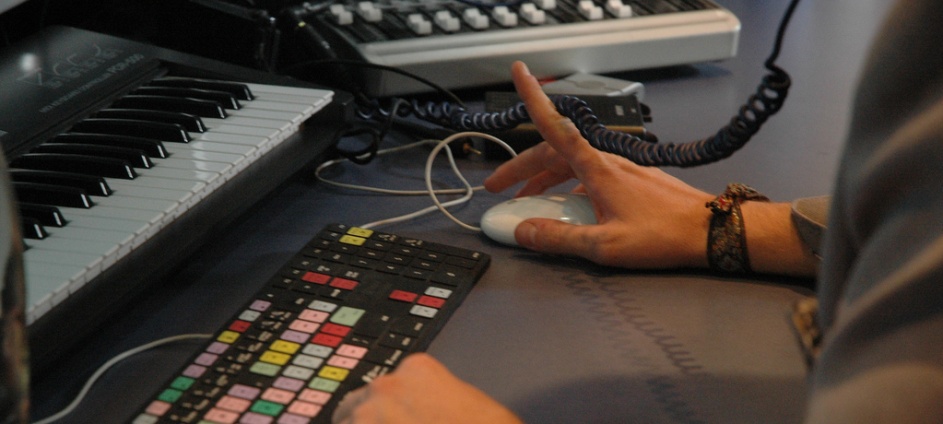
Nevertheless thanks to the digital media we’re not just critical or uncritical readers and viewers now. Many of the recipients became amateur artists (before the artist status was strictly reserved to a limited group of professionals). The number of accessible creation methods has gone up, most importantly though a free distribution channel emerged. In the world dominated by media, the skill to create one’s own recordings or films, and remixing other authors’ works is the equivalent of literacy.
This is where two concepts meet: rank-and-file culture essential for the maintenance of the civil society bonds and the perspective of high culture, art and professionals. How come? The negative point of reference in both cases is perceiving culture as a product, as content dressed in a uniform and placed on a supermarket shelf, something of a questionable value, and, as if this was not enough, futile – resilient to alteration and processing. Artificial product promoted by the industry.
Media are actually responsible for changes in education in general. It’s a truism to claim that learning information by heart is pointless when you can find it online in just few seconds, especially that this information will probably be out of date in a few years time. It might even lead to an opposite effect. The beginnings of public education have more to do with disciplining the pupils rather than teaching them creativity (for all of those interested in the subject, please refer to the stunning performance by Ken Robinnon at a TED conference.) Instead we face new challenges, such as learning not to drown in the information excess and chaos, especially the skill to judge what we come across.
The more media literacy we own, the better. Understanding media is just as important as participation in creating it, not just in terms of trying it out. It’s a shared problem of all of us, and let’s not deceive ourselves: it won’t fail to last. The paradox is adults are affected more than children. Only few percent of the population develops the digital technologies potential. By all accounts the new born generations practice creative performance with much more ease. The advanced age group will have to function in the digital culture for many more decades, therefore media lessons must be obligatory for them. Otherwise a person being able to write and copy notes on a photocopier will be like a semiliterate spelling letter by letter. While as digital generation members own more of a media-agility rather than media-wisdom.
Media education does not have to be strictly connected with the school programme, it’s often informal. Talking about music, films or commenting blog entries is nothing, but widening media horizon to one another. These conversation can shape as video-replies, which is on another level shows how deeply creativity is cohered with everyday social practises (in case of YouTube it’s hard to distinguish whether a video is an original file, a comment, or a minor unofficial talk between friends, with the recording as a starting point).
It might seem that new skills come naturally: the number of bedroom DJ’s remixing music is growing large, YouTube is full of amateur video recordings, and yet the fact is that the cultural space is as alien to us as zero gravity. Without media literacy we’re endangered with culture equivalent of nausea onboard a vomit comet.
translated by Agnieszka Słodownik