
The place of culture and the ideas for media education, their tasks and the challenges they face in the world dominated by modern technologies – these will be the topics for discussions held during the sixth Culture 2.0 Conference organised by the National Audiovisual Institute, Biweekly’s publisher, on October 27-29 in Warsaw, featuring researchers, theoreticians and activists.
The term Culture 2.0 refers to the new cultural circuit, shaped by the experience of using digital media and diverse possibilities offered by them. Today, one can hardly imagine an educational process ignoring these possibilities. The theme of this year's edition of the conference is “Media-Aware” and the debates will be devoted to a new model of media education, created by cultural institutions, but also by schools, libraries or laboratories using new media.
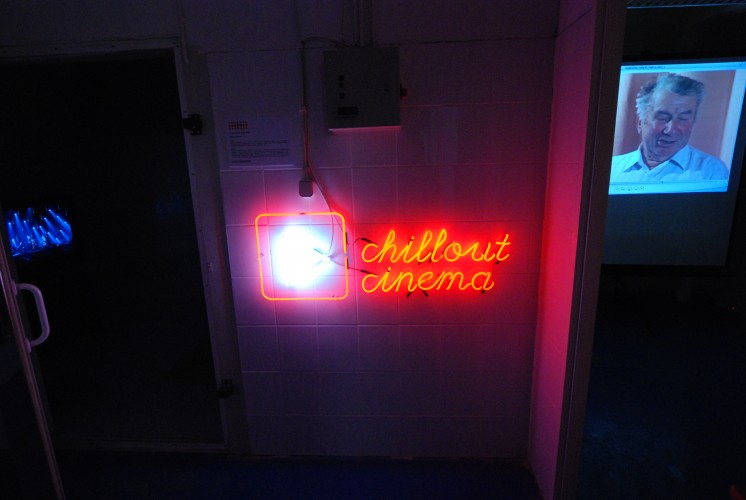 Chillout Cinema will screen a selection
of publications by the National Audiovisual
InstituteThe list of guests invited to the conference includes representatives of the media, cultural institutions, sociologists, cultural managers and teachers who have been actively involved in formal and informal educational projects, and who implement new ideas and constantly search for innovative solutions. They will outline the state of media education in Poland and abroad, share their experiences and good practices in the field of modern education, and present film education projects. Conference participants will also attempt to define media education and reflect on the ways in which new technologies shape contemporary societies and impact human relations.
The theoretical framework of the conference will be set by the discussion “Media: Theory Applied”, featuring representatives of numerous domains: education, sociology and anthropology, i.a. Andrew Burn, Professor or media education from the University of London, Waldemar Kuligowski, anthropologist from Adam Mickiewicz University, or Eric Joris representing the CREW performance group.
Other discussions will focus on relations between civic society and media education; public broadcasters will present their point of view, whereas culture activists and theoreticians will discuss specific solutions that can be applied in modern education and development directions for the education system. The list of participants includes i.a.: Juliusz Braun, the chairman of Telewizja Polska S.A., Bogusław Kisielewski, the CEO of Kino Polska TV, Krzysztof Luft from the National Broadcasting Council, Roei Amit from Institut National de l’Audiovisuel (INA), Odile Chenevez from the French Centre for liaison between teaching and information media (CLEMI), Dalida van Dessel, from the Dutch Sound&Vision Institute and Edwin Bendyk, journalist of Polityka magazine, Aleksandra Pezda, author and journalist of Gazeta Wyborcza, Alicja Pacewicz from the Center of Civic Education (Centrum Edukacji Obywatelskiej) and representatives of the Ministry of National Education and the government project entitled “A laptop for each student”.
The part of the conference devoted to practical solutions should prove particularly inspiring for teachers, workshop leaders and representatives of non-governmental organisations. They will have the opportunity to participate in workshops concerning new media and will be shown possibilities offered by media and technology in the educational process, as well as simple and innovative ways of applying them in lessons. They will also showcase their own projects and ideas during the first day of Culture 2.0 Conference.
While researchers discuss education systems and changes to the social reality brought about by modern technologies Iluzjon, Filmoteka Narodowa will screen Offscreen, the cult movie by Christoffer Boe – a story of a film director obsessed with the idea of documenting the disintegration of his marriage. The film will be screened as part of the Eurocine27 project, carried out in Poland for the first time, presenting the rich and unique European film tradition.
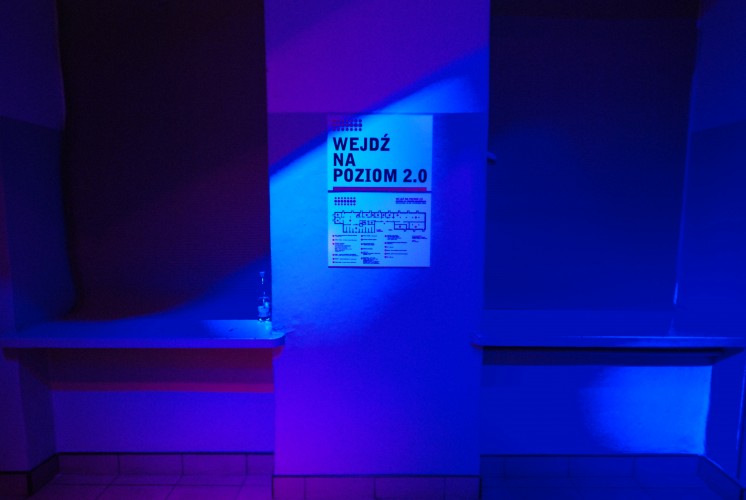
The theme of the conference is a new model of culture participation, shaped by new technologies. The organisers of the conference ensured that the concept of participation elaborated by the academics goes beyond the theoretical level and is developed in action.
A cycle of artistic events and workshops will be organised at Level 2.0 – a former factory hall, designed especially for the conference, in one of the buildings that are home to the National Audiovisual Institute at ul. Wałbrzyska 3/5 in Warsaw.
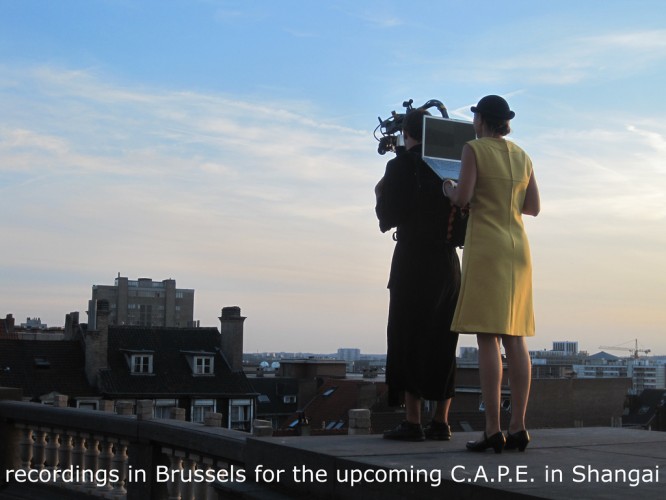 CREW performanceCREW, Belgian performance group will be the special guest of the conference. The artists will invite the audience into the alternative world of 3D design during the performance entitled C.A.P.E. Brussels. Forms and Shapes Foundation will encourage children into the world of virtual insects and talking plants – all thanks to the stage design that has already become the distinguishing mark of the organisation. The world of sounds will be represented by the project of Studio Eksperymentalne Reaktywacja, whose roots go back to the famous Experimental Studio of the Polish Radio and the panGenarator group, with Hedoco presenting Dodecaudion – a spatial audiovisual instrument whose form encourages live expression of the player. The audience will have the opportunity to digitalise their own VHS tapes or take one book to pieces in order to see what is hidden inside it.
The programme of the last day of the conference includes the closing gala of the 48 Hour Film Project Warsaw, the first Polish edition of the international competition and film festival for young filmmakers. A closing gala will sum up a week of work of the filmmakers participating in the competition.
All events organised in the framwork of Culture 2.0 are free and open to the general public; they require, however, prior registration on the website of the conference at www.kultura20.pl.